New

Data Evolves. Your Monitoring Should Too. Introducing Flexible Thresholds.

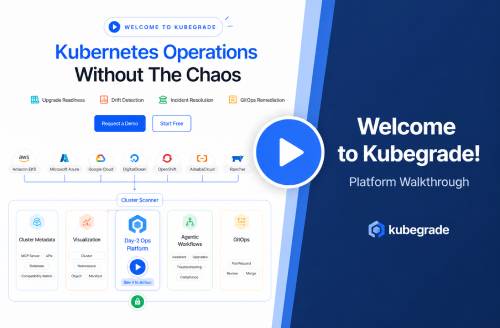
Kubernetes Operations Without The Chaos

Banner Image

Trusted by platform teams running Kubernetes at scale

Detect. Understand. Fix. - Unified day-2 operations

Cluster Upgrades – Kubegrade Upgrade Control

A centralized upgrade system designed to plan, validate, and execute Kubernetes upgrades safely at scale through:

  •  Upgrade readiness analysis
    Automatically assess clusters for deprecated APIs, version skew, dependency risks, and configuration blockers before upgrades begin.
  • Standardized upgrade workflows
    Apply repeatable, auditable upgrade processes across all clusters instead of one-off manual runbooks.
  • Risk-aware execution
    Surface upgrade blast radius and affected workloads to reduce downtime and failed rollouts.
  • Multi-cluster visibility
    Track upgrade status, progress, and gaps across all environments from a single control plane.
    Run Kubernetes upgrades as an operational process, not a fire drill

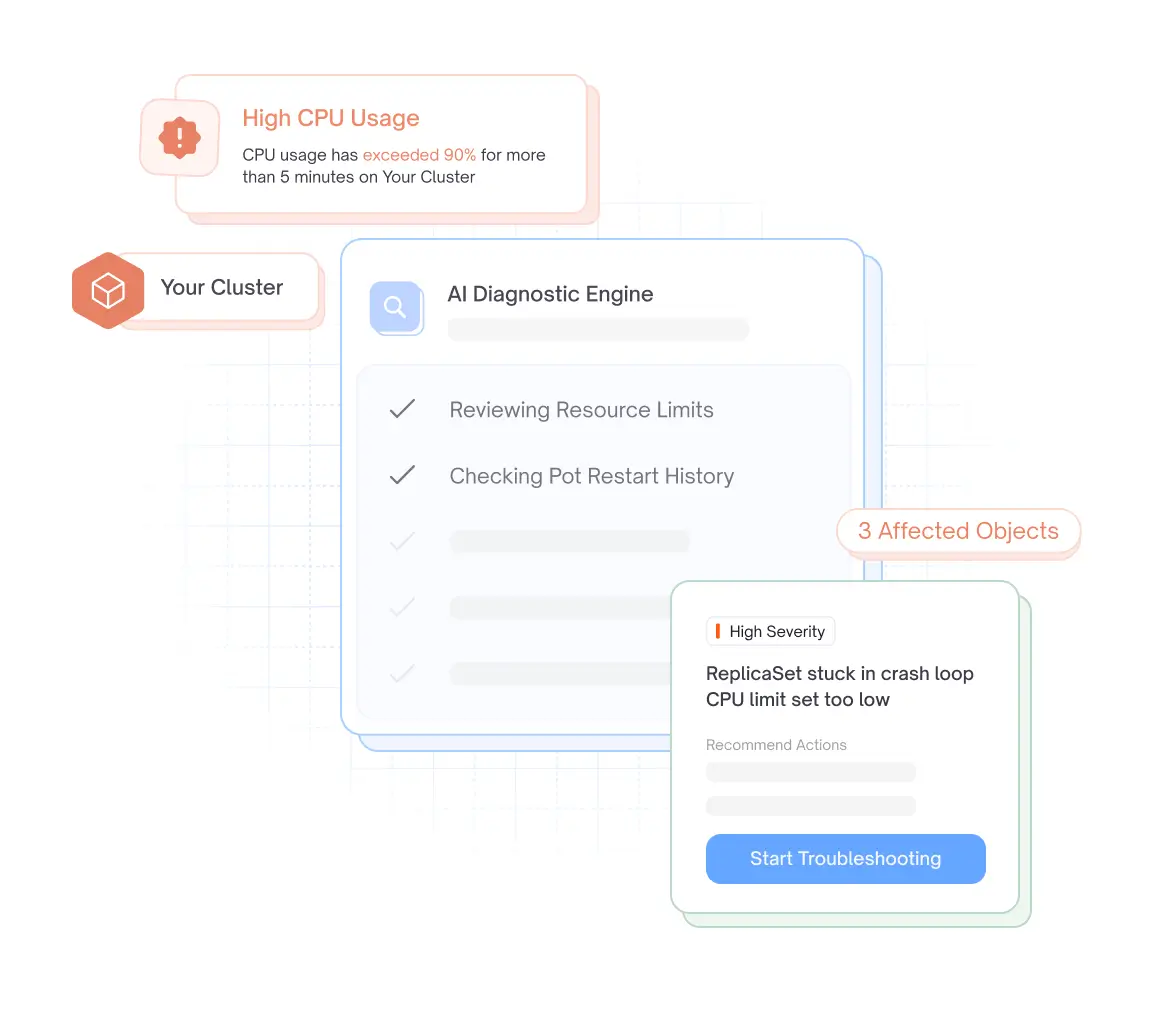
Troubleshooting – Kubegrade Diagnostics

A structured troubleshooting layer that replaces ad-hoc investigation with repeatable diagnosis workflows:

  • Context-aware issue analysis
    Correlate alerts, events, logs, and cluster state to pinpoint root causes faster
  • Cross-cluster problem detection
    Identify recurring issues and shared failure patterns across multiple clusters
  • Task-specific automation
    Reduce time spent on repetitive investigation steps through pre-defined diagnostic logic.
  • Human-in-the-loop controls
    Surface findings clearly while keeping final decisions with engineers.
    Troubleshoot Kubernetes issues with clarity instead of tribal knowledge

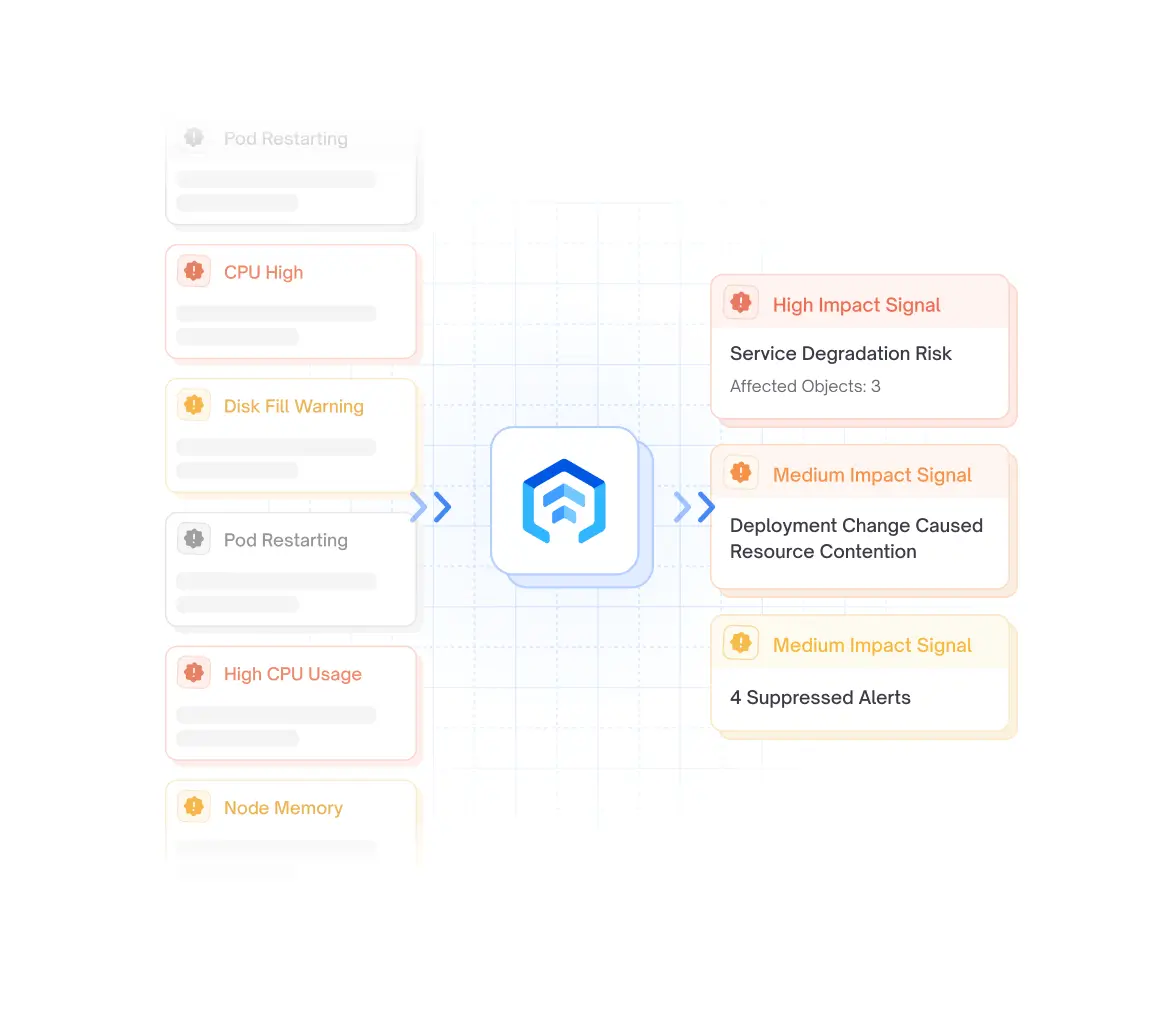
Alert Sorting – Kubegrade Signal Intelligence

A signal management layer that turns alert noise into prioritized, actionable information:

  • Alert deduplication and grouping
    Automatically group related alerts to reduce noise and cognitive overload.
  • Impact-based prioritization
    Surface alerts based on service impact, cluster criticality, and operational risk.
  • Context enrichment
    Attach cluster state, recent changes, and related incidents to every alert.
  • Actionability filtering
    Suppress low-value alerts and highlight issues that require intervention.
    Stop reacting to alerts. Start acting on signals.

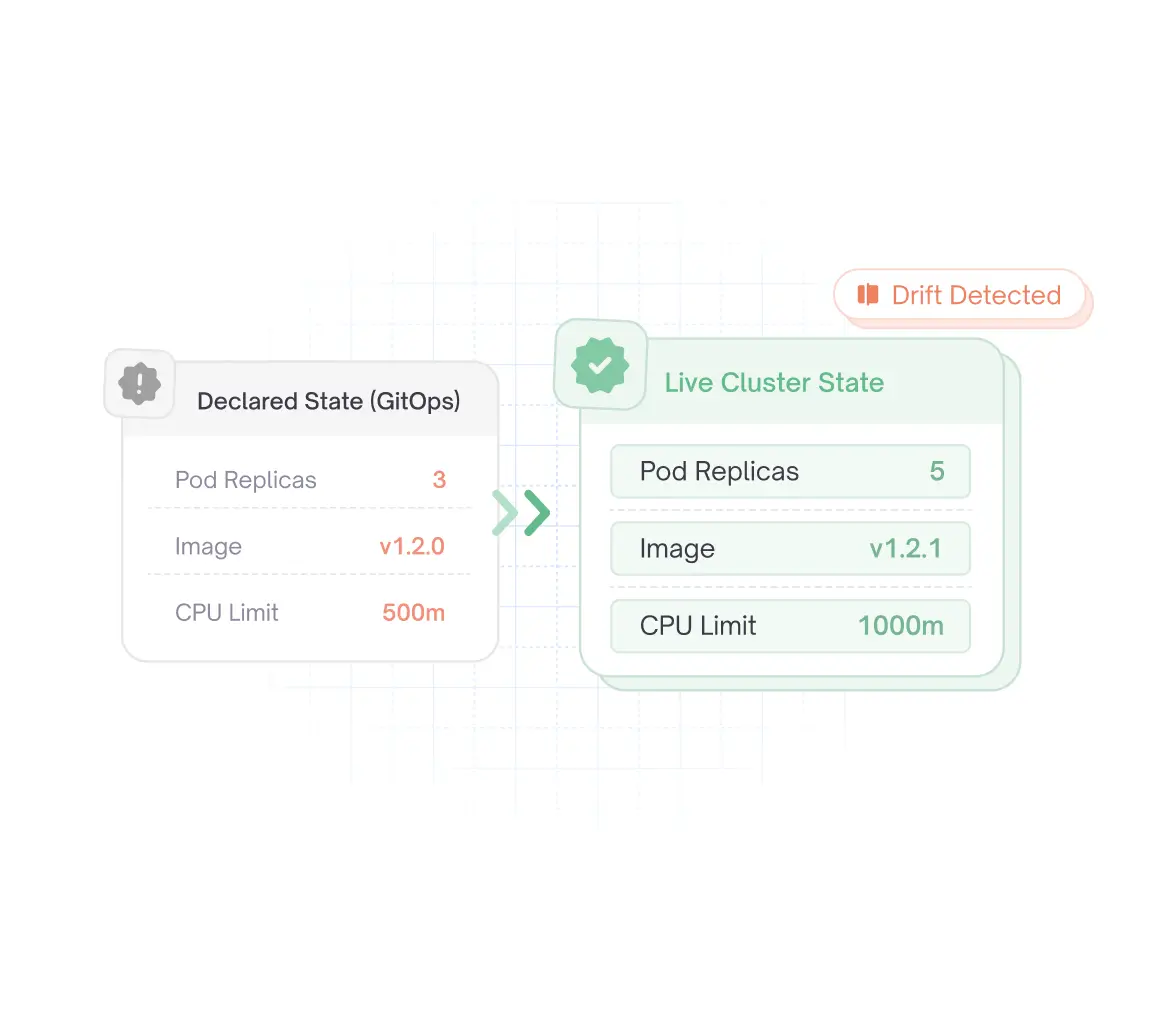
Drift Detection – Kubegrade Drift Monitor

A continuous drift detection system that enforces consistency across clusters and environments:

  • Configuration drift detection
    Identify changes between declared state and live cluster state.
  • Undocumented change visibility
    Surface manual or out-of-band changes that bypass GitOps workflows.
  • Policy and guardrail enforcement
    Detect violations of platform standards and security baselines
  • Historical drift tracking
    Understand when, where, and how drift was introduced.
    Prevent silent configuration decay before it becomes operational debt.

Kube Assistant – Kubegrade Agents

Goal-oriented AI agents embedded into Kubegrade, built to execute real operational work using full platform and cluster context through:

  • Pre-built, highly tuned agents
    Purpose-built agents optimized for specific tasks such as troubleshooting, upgrade preparation, and pull request generation.
  • Custom agent framework
    Create custom agents tailored to internal policies, workflows, and operational standards.
  • Collaborative and schedulable execution
    Agents can run on schedules or events and work together to handle complex, multi-step tasks.
  • Context-rich, GitOps-native actions
    Agents operate using live cluster metadata and external systems (Terraform, Argo CD, Git), delivering all remediation as pull requests

GitOps Remediation – Kubegrade GitOps Engine

A remediation layer that enforces safe, auditable fixes through Git-based workflows:

  • Git-based change proposals

    Generate pull requests for fixes instead of making direct cluster mutations
  • Approval-driven execution
    Ensure every change follows review and approval processes
  • Consistent remediation patterns
    Apply standardized fixes across clusters without manual repetition
  • Audit-ready change history
    Maintain a complete, traceable record of all remediations.
    Fix issues without breaking governance.

Cluster Visualization – Kubegrade Control Plane

A deep visualization layer that exposes Kubernetes state at the object level to help teams identify risk and take action quickly through:

  • Object-level cluster visibility
    Visualize workloads, nodes, resources, configurations, and dependencies down to individual Kubernetes objects.
  • Early warning state detection
    Highlight unhealthy, risky, or misconfigured objects that require immediate attention.
  • Cross-cluster operational context
    Compare state, risk, and configuration patterns across multiple clusters and environments.
  • Action-oriented views
    Surface visuals designed to support operational decisions, not passive monitoring.
    See exactly where problems exist in your clusters before they escalate.

Leaders in Kubernetes Operations Automation

Kubegrade automates day-2 Kubernetes operations without replacing your existing tools or workflows.

Built for Enterprise Environments

Read-only by default

No risky write access to live clusters.

GitOps-first remediation

All changes flow through pull requests and version control.

On-prem & private cloud support

Designed for regulated and security-sensitive environments.

Enterprise-grade security

TLS in transit. Encrypted at rest. Least-privilege architecture.

Encryption

Your data is encrypted in motion with TLS and at rest with AES-256.

Integrations to existing stack

Amazon EKS
Amazon EKS
Prometheus
Prometheus
VictoriaMetrics
VictoriaMetrics
OpenTofu
OpenTofu
Kustomize
Kustomize
Jenkins
Jenkins
GitHub
GitHub
Fluentd
Fluentd
Dynatrace
Dynatrace
Flux CD
Flux CD
CircleCI
CircleCI
OpenTelemetry
OpenTelemetry

and many more...

People are loving Kubegrade, see what you are missing

“We introduced Kubegrade across a few clusters during a recent upgrade cycle. What used to take days of manual checks and coordination was reduced to a structured workflow with clear visibility. The ability to generate pull requests for fixes instead of making direct changes gave our team a lot more confidence.”

— Head of Platform Engineering, Northbridge Financial

“Our environments are a mix of cloud and client-managed infrastructure, which usually makes standardization difficult. Kubegrade helped us get a consistent view of what’s actually running versus what’s defined in code. The drift detection alone surfaced issues we didn’t know we had.”

— DevOps Lead, Atlas Digital Systems

“We deal with constant alerts and troubleshooting requests from internal teams. Since using Kubegrade, we’ve been able to prioritize what actually matters and resolve issues faster. Having context tied to each problem, along with suggested fixes, has reduced a lot of back-and-forth between teams.”

— Site Reliability Engineer, VertexCloud Technologies

Featured articles